
Porto da Barra: The bay where Salvador applauds the sun
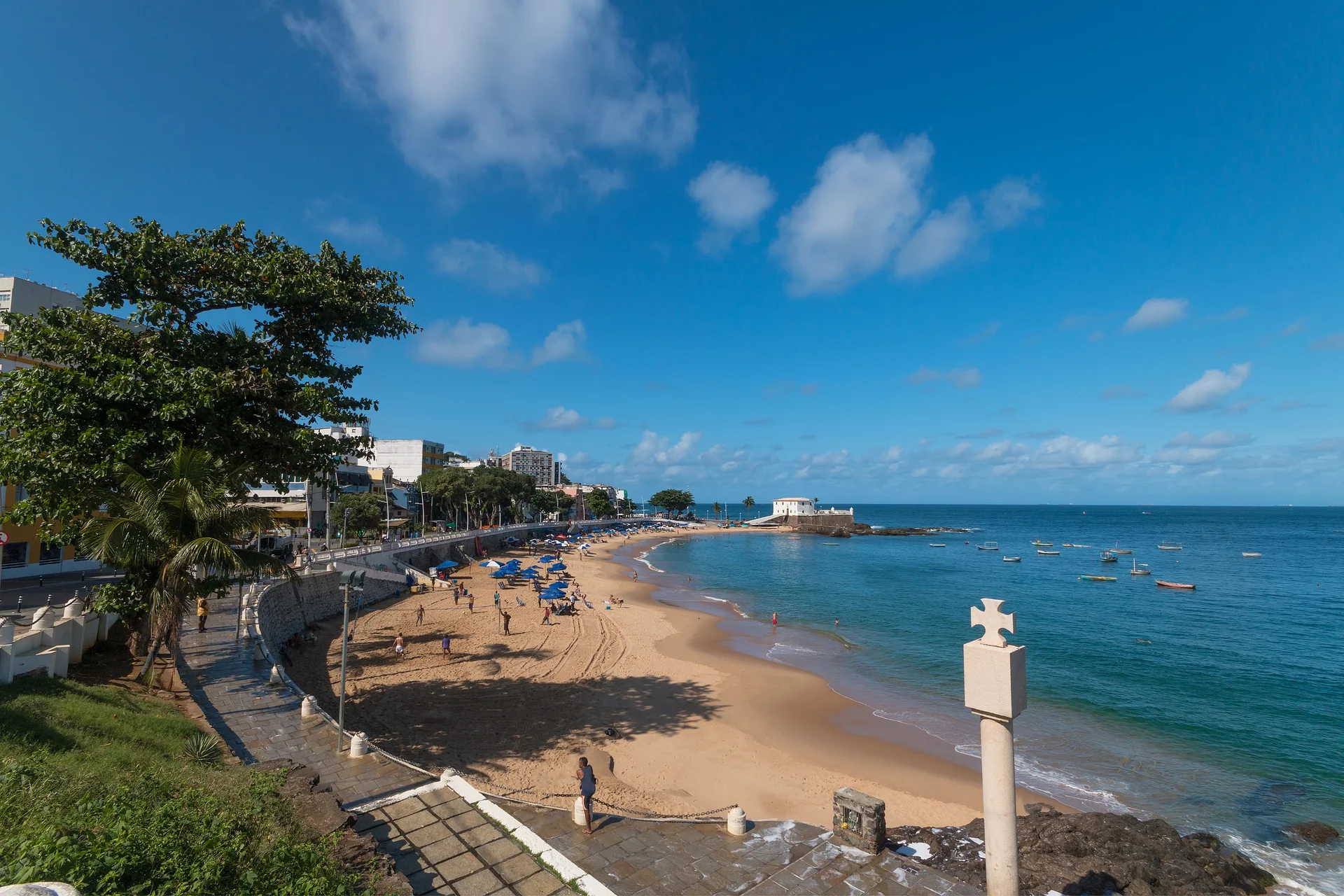
The turquoise waters of the All Saints Bay wash up on a 600-meter stretch of golden sand, guarded by three stone sentinels from centuries past. Here, every day ends in a spontaneous communal event where locals and travelers gather to watch the sun sink into the Atlantic Ocean.
Why is Porto da Barra special?
This urban beach holds a unique place in Brazilian history. In 1549, it was on this shore that the Portuguese governor Thomé de Souza landed to officially establish Salvador, the first capital of Brazil. A cross-shaped monument still stands today to mark the birthplace of the nation. But Porto da Barra is more than its colonial roots. It represents the Bahian spirit in its most democratic and joyful form.
Its geography provides a rare advantage in Brazil. Because it faces west at the mouth of the bay, it is one of the few places in the country where you can watch the sunset over the ocean. This makes it the go-to spot for late afternoons, when the orange light sets the horizon on fire and the crowd greets the twilight with applause, whistling, and singing.
Calm waters for every swimmer
Unlike the often rough ocean beaches of Salvador, Porto da Barra is shielded by the natural protection of the bay. The water is calm, warm, and shallow. Kids splash around safely while water sports enthusiasts take advantage of the conditions for kayaking, stand-up paddleboarding, or outrigger canoeing.
Natural pools form around a breakwater at the southern end of the beach, creating tranquil basins perfect for a dip. The clarity of the water makes it easy to spot small fish swimming near the shore. On the sand, swimming, functional fitness, and rowing classes begin early, turning the beach into an open-air gym.
Three forts telling a colonial story
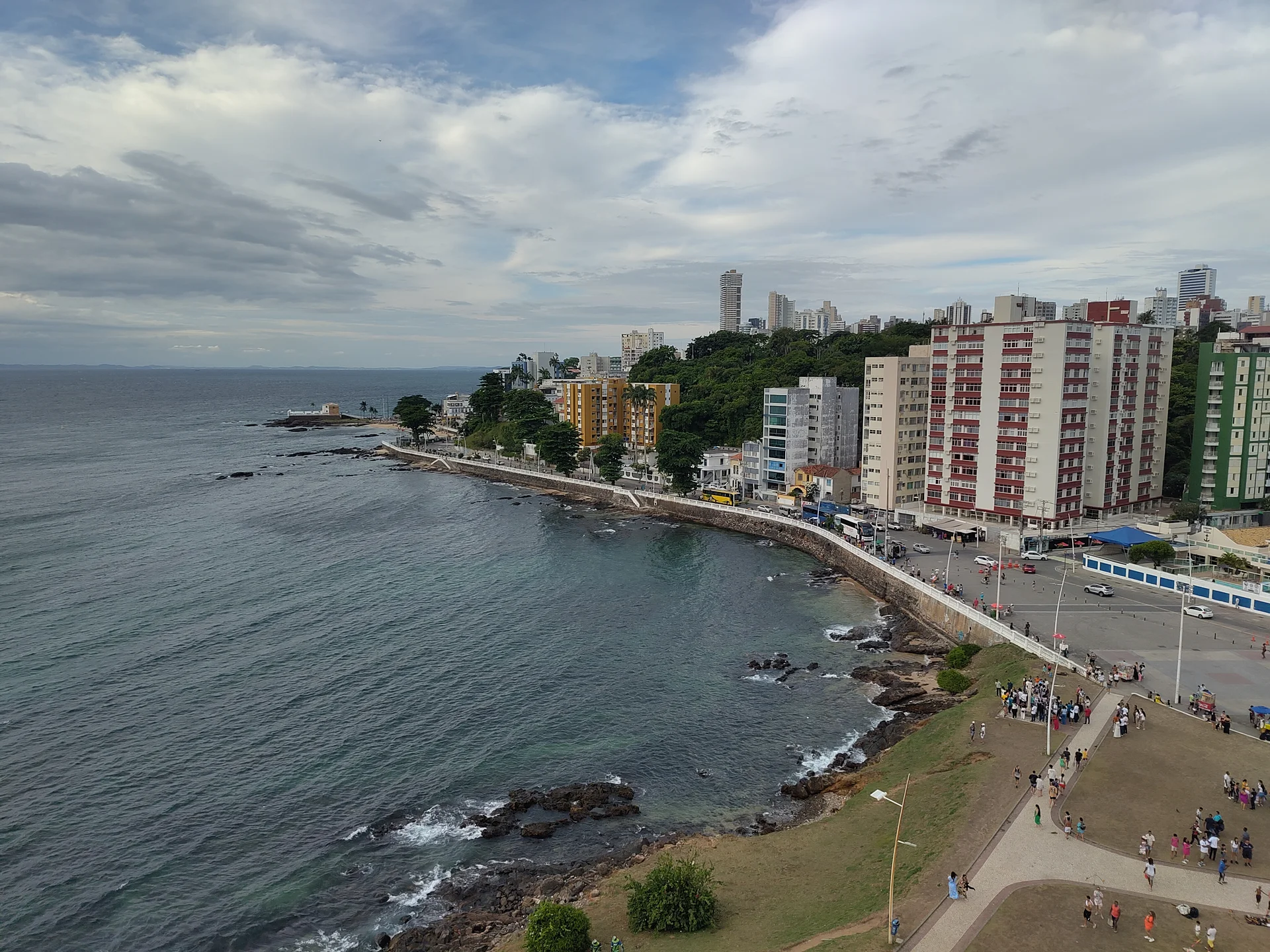
The skyline of Porto da Barra is punctuated by three 17th-century Portuguese fortresses, remnants of the era when Salvador had to defend itself against Dutch invasions.
- To the south, the Fort Santo Antônio da Barra houses the famous Farol da Barra (Barra Lighthouse) and the Nautical Museum of Bahia. It is worth a visit for its collection of maritime artifacts and the panoramic view from the top of the fort.
- The Fort Santa Maria, located right on the beach, has been converted into a multimedia cultural space dedicated to the artist Carybé. Every evening between 6:15 PM and 7:00 PM, video projections light up its facade, creating a free visual show.
- To the north, the Fort São Diogo completes this defensive trio and also hosts rotating exhibitions.
Nautical Museum: A trip through maritime history
The Nautical Museum warrants at least an hour of your time. It tracks the maritime epic of Brazil through ship models, antique navigation instruments, and accounts of major expeditions. Admission is 15 BRL (about $3). Hours vary: Tuesday and Wednesday from 9:00 AM to 6:00 PM, and until 11:00 PM Thursday through Saturday.
The art of enjoying acarajé by the ocean
You cannot leave Porto da Barra without trying acarajé, a bean fritter fried in palm oil and stuffed with vatapa (a shrimp and cashew nut cream), salad, and hot sauce. Beach stands sell this Bahian staple, but locals will point you toward the stall run by Tânia, located right in front of the Farol da Barra.
This baiana in traditional dress carries on a craft passed down through five generations of her family. Her acarajé, crispy on the outside and soft on the inside, served with fresh shrimp, is a local favorite. Expect to pay about 10 to 15 BRL (about $2 to $3) for a fully loaded acarajé. The stands also sell bolinhos de estudante (tapioca-based sweets rolled in coconut) and cocadas for dessert.
Pro tip: Always negotiate the price for chair and umbrella rentals before you settle in, especially on weekends when rates can spike. Also confirm the price of drinks to avoid surprises. On weekdays, you will typically pay around 25 BRL (about $5) for two hours for four people.
Authentic Bahian life
Porto da Barra pulses to the rhythm of Salvador. Street vendors peddle fresh coconut water, grilled cheese (queijo assado), and frozen cocktails. Beach volleyball and soccer matches break out on the sand, fueled by cheers from spectators. Small fishing boats unload their daily catch while beach clubs draw city dwellers looking to unwind.
On weekends, the energy level rises. Music blares from portable speakers, the crowd thickens, and the beach becomes the setting for a public party where families, surfers, artists, and celebrities mingle. This social mix is why Porto da Barra is known as the most inclusive beach in Salvador.
The bike path running along Avenida Sete de Setembro (September 7th Avenue) attracts joggers, cyclists, and skaters, creating a constant motion between land and sea. Restaurants and bars along the waterfront fill up by late afternoon, offering views of the bay illuminated by the final rays of the day.

This beach is located between 2 forts that used to control the entrance to the bay. Since it is right in the city, there is quite a bit of trash...