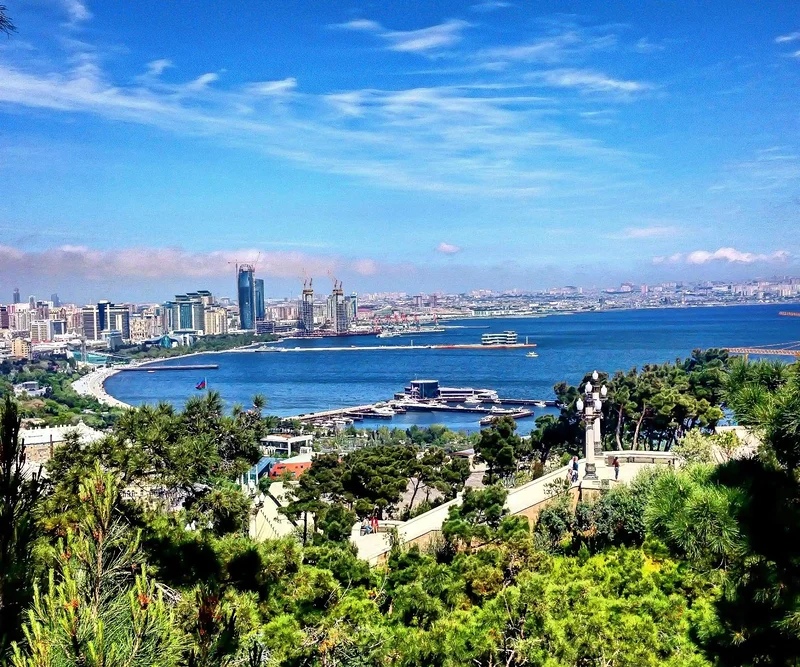
Azerbaijan: Where Fire Burns Beneath the Modern Surface
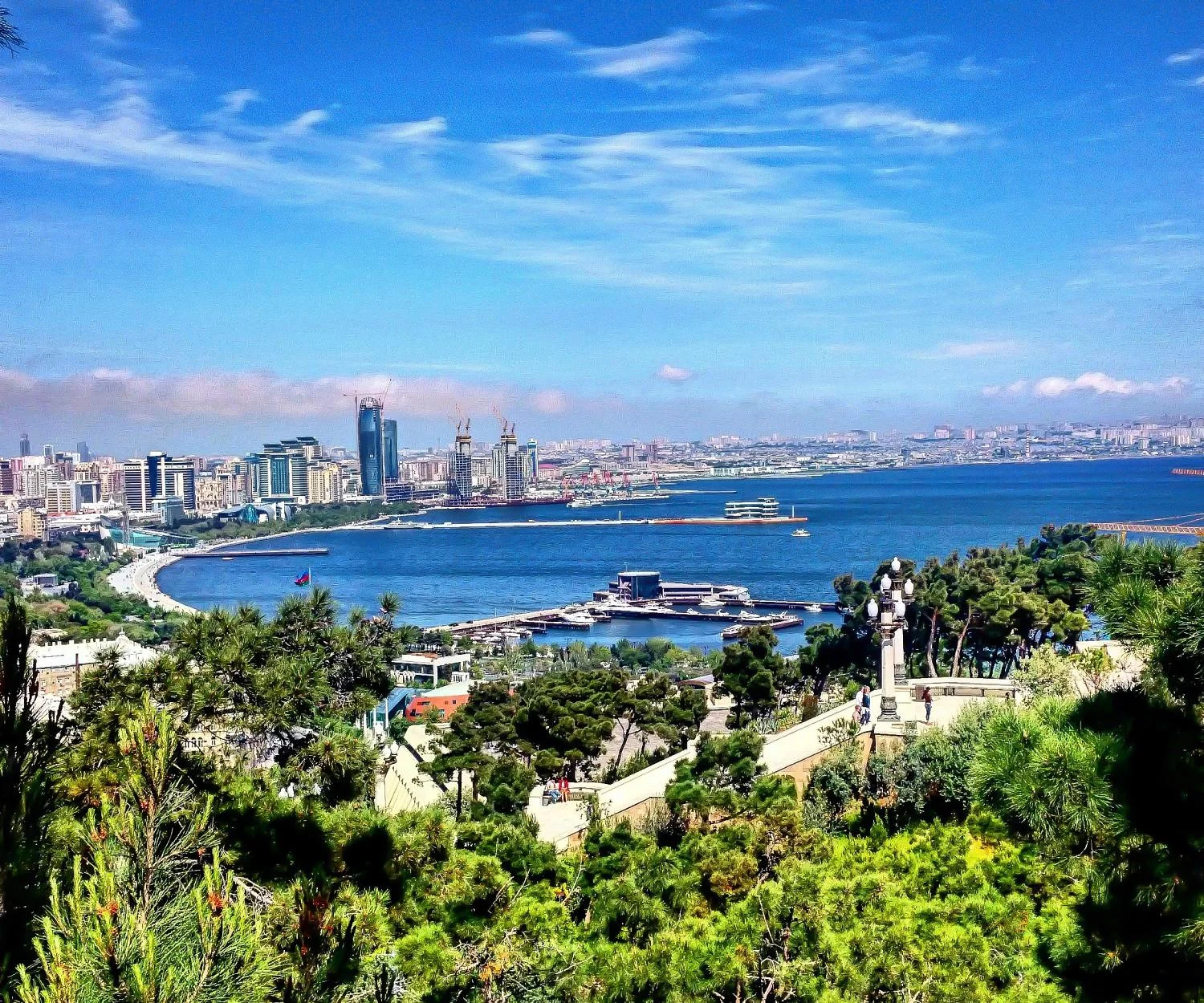
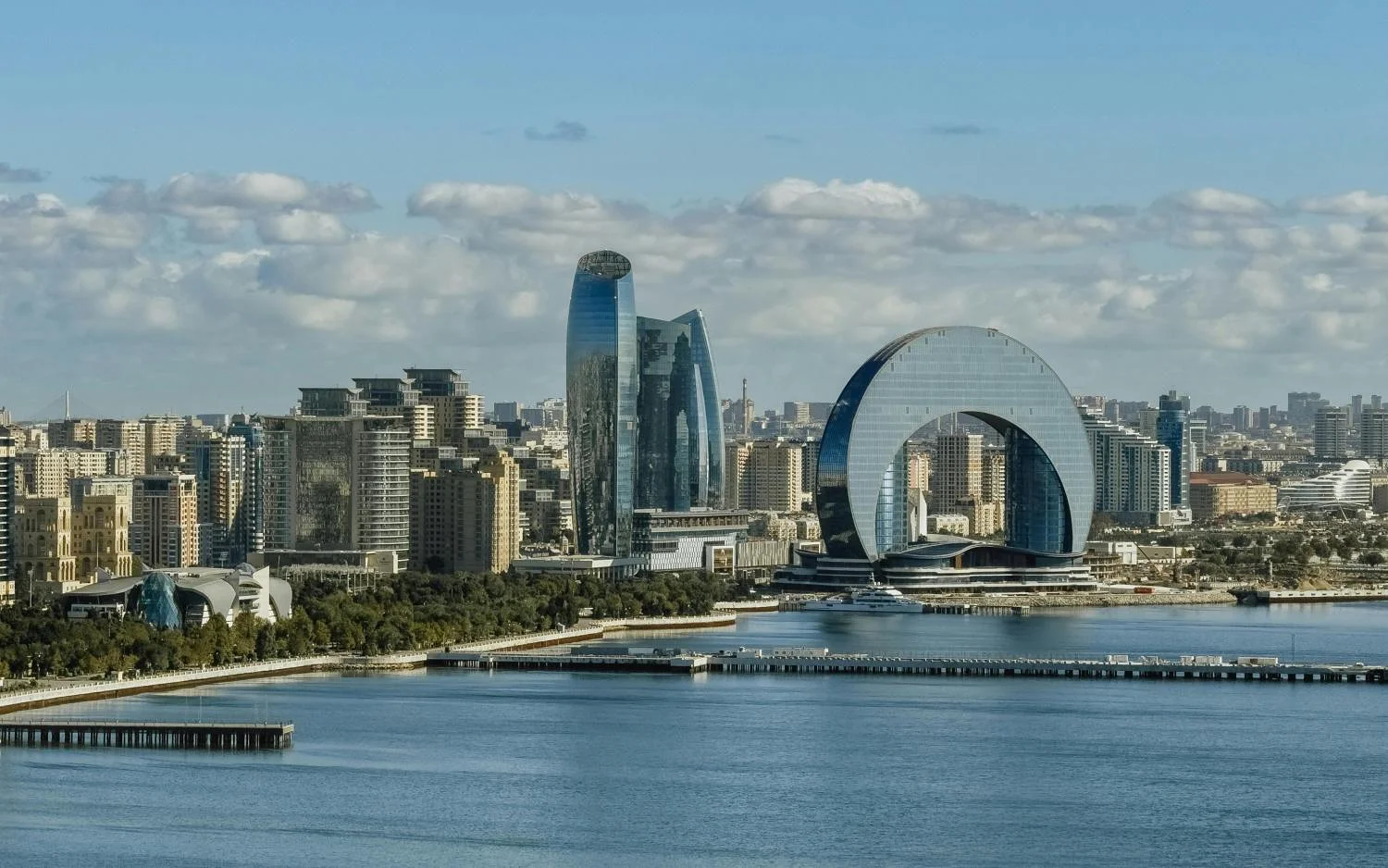
The ground in Azerbaijan literally burns. Natural gas flames have been pushing through the earth on the Absheron Peninsula for thousands of years, and this is exactly where Zoroastrianism took root, a religion built around the veneration of fire. Today, the Flame Towers carry that legacy into the 21st century: three LED-clad skyscrapers that light up Baku's skyline every night, their reflections rippling across the Caspian Sea.
The wealthiest country in the Caucasus, shaped by Persian culture, Turkic language, and Soviet-era urban planning, Azerbaijan doesn't look or feel like anywhere else. That's the whole point.
A genuinely compelling destination, but read this before you book
This country is for travelers who get bored by predictable itineraries. If you're into architecture, hiking in the Greater Caucasus, Turco-Persian food, and Silk Road history, you can fill one to two solid weeks here without running out of things to see.
Baku alone layers a UNESCO-listed old city, buildings designed by Zaha Hadid, and a serious food scene. Outside the capital, mountain villages feel like they exist in a completely different century.
That said, if you're after turquoise beaches and resort infrastructure, look elsewhere. The Caspian coast is not tropical. Outside Baku, English is scarce and some roads are rough. Come organized, not hoping to improvise everything on the fly.
Security alert for US travelers
The US State Department currently advises travelers to exercise increased caution in Azerbaijan. More specifically, the border areas with Armenia and the former Nagorno-Karabakh region are flagged due to landmines left over from the conflict. Those zones are not safe to enter. Check travel.state.gov for the latest advisory before booking, and enroll in the Smart Traveler Enrollment Program (STEP) so the US Embassy can reach you in an emergency.
On a practical level: avoid political conversations, don't photograph government buildings or military installations, and know that overstaying your visa leads to serious administrative complications that can only be resolved at the State Migration Service in Baku, not at the airport.
Heads up: land borders are closed to entry. You can only enter Azerbaijan by air. Border areas near Armenia and the former Nagorno-Karabakh region are off-limits due to landmines.
Is Azerbaijan safe for solo female travelers?
Azerbaijan is a secular Muslim country, noticeably more secular than neighboring Iran. There are no dress requirements for women in public. Baku is cosmopolitan and generally safe. In rural areas, attitudes are more conservative, and dressing modestly (no head covering required) is the smart move. Petty crime is low across the country.
Budget: surprisingly affordable
Budget travelers can get by on 50 to 85 AZN per day (about $30-50). Mid-range comfort runs 100 to 155 AZN ($60-90). A full meal at a local restaurant costs 8 to 14 AZN ($5-8), a guesthouse room runs 25 to 50 AZN ($15-30) per night, and intercity bus tickets rarely top 8 AZN ($5). Baku is the most expensive city in the country, but everywhere else is very affordable.
Baku: a capital with a split personality
Few capitals anywhere pull off this kind of contrast. The historic core, Icheri Sheher, is a fortified old city on the UNESCO World Heritage list. Its cobblestone lanes hold the Maiden Tower, the 15th-century Palace of the Shirvanshahs, and old caravanserais converted into carpet restaurants. You walk slowly here. You drink black tea from a pear-shaped glass.
A few blocks away, the city shifts entirely. Zaha Hadid's Heydar Aliyev Center flows in white curves like something that landed from orbit. The Carpet Museum, housed in a building shaped like a rolled carpet, documents a craft recognized by UNESCO. The Baku Boulevard, a multi-kilometer promenade along the Caspian, gives you the ideal angle on the Flame Towers at sunset.
Day trips from Baku
The Absheron Peninsula holds the country's most unusual sights. The Ateshgah Fire Temple, a former Zoroastrian place of worship fed by natural gas flames, takes about an hour to visit in the town of Surakhany. Yanar Dag, the "burning mountain," is a hillside that has been permanently on fire for centuries. The effect is more striking after dark, even if the actual flame is smaller than you might expect.
About 50 minutes south, the Gobustan Reserve combines over 6,000 petroglyphs dating back 40,000 years with bubbling mud volcanoes. It's the most popular half-day trip from the capital. Book a guided tour: finding the mud volcanoes on your own is genuinely difficult, and the trails are not marked.
The Caucasus road: Sheki, the one stop everyone loves
Ask nearly any traveler who's been to Azerbaijan and they'll tell you Sheki is the highlight. This former Silk Road city, also UNESCO-listed, sits at the foot of the Greater Caucasus about five hours by bus from Baku. Its Khan's Palace, built in 1797, is an extraordinary miniature masterpiece. The shebeke windows, geometric stained-glass panels assembled from thousands of colored glass pieces without a single nail or drop of glue, cast kaleidoscopic light across interior frescoes.
The town still runs on its artisans. Silk workshops operate in the historic center, and the 18th-century caravanserai has been converted into a hotel where rooms run around 50 AZN per night (about $30). The local bazaar is stacked with Sheki-style pakhlava (a layered pastry, finer and more aromatic than the Baku version) and handmade halva.
Insider tip: between Baku and Sheki, stop in Shamakhi for its Juma Mosque, then continue to the village of Lahij, a medieval settlement perched at 4,500 feet where copper craftsmen hammer their work from morning to night in open-street workshops. The road to get there runs along sheer cliffs: spectacular in good weather, impassable in rain.
High mountain villages: Khinalig and the Caucasus peaks
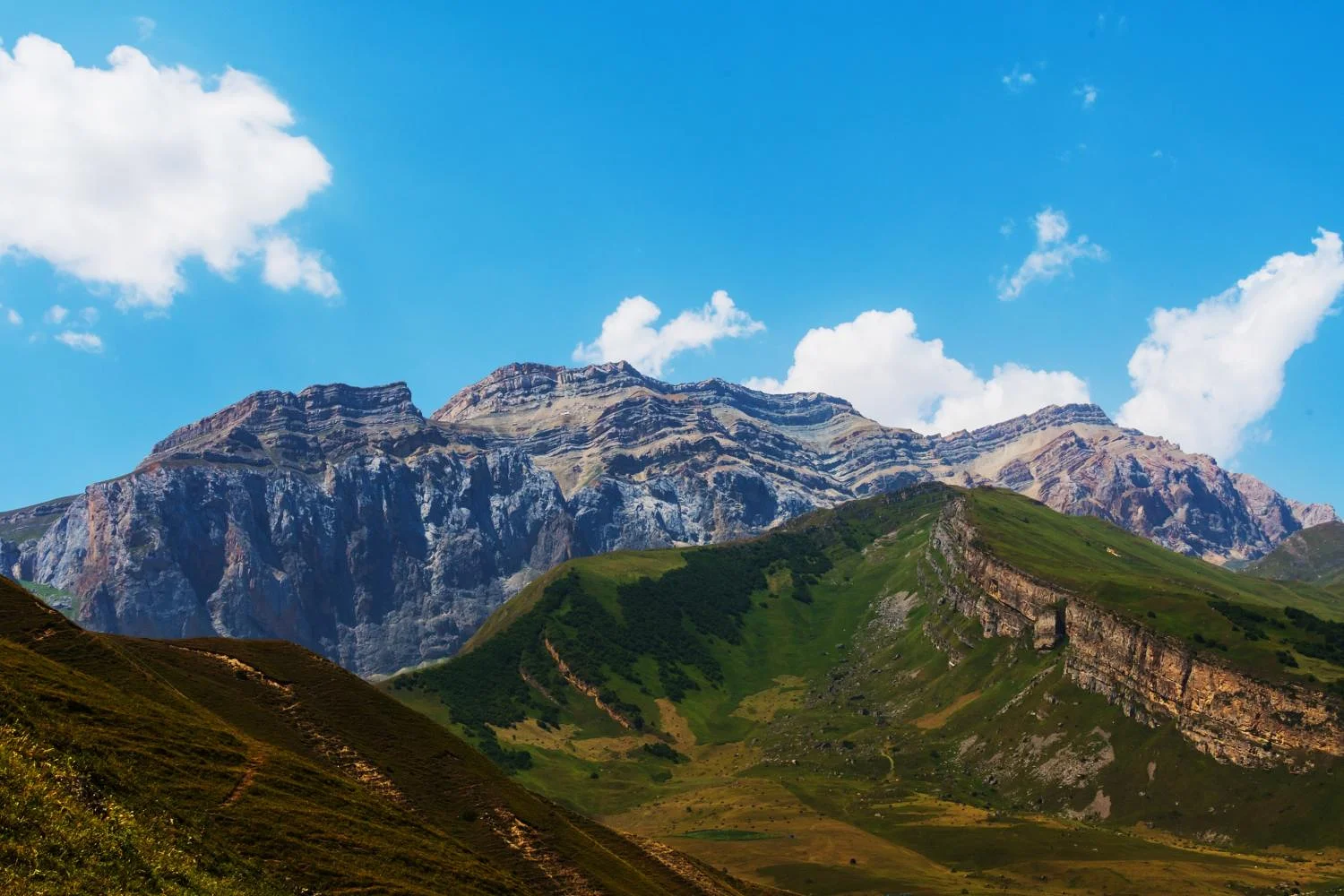
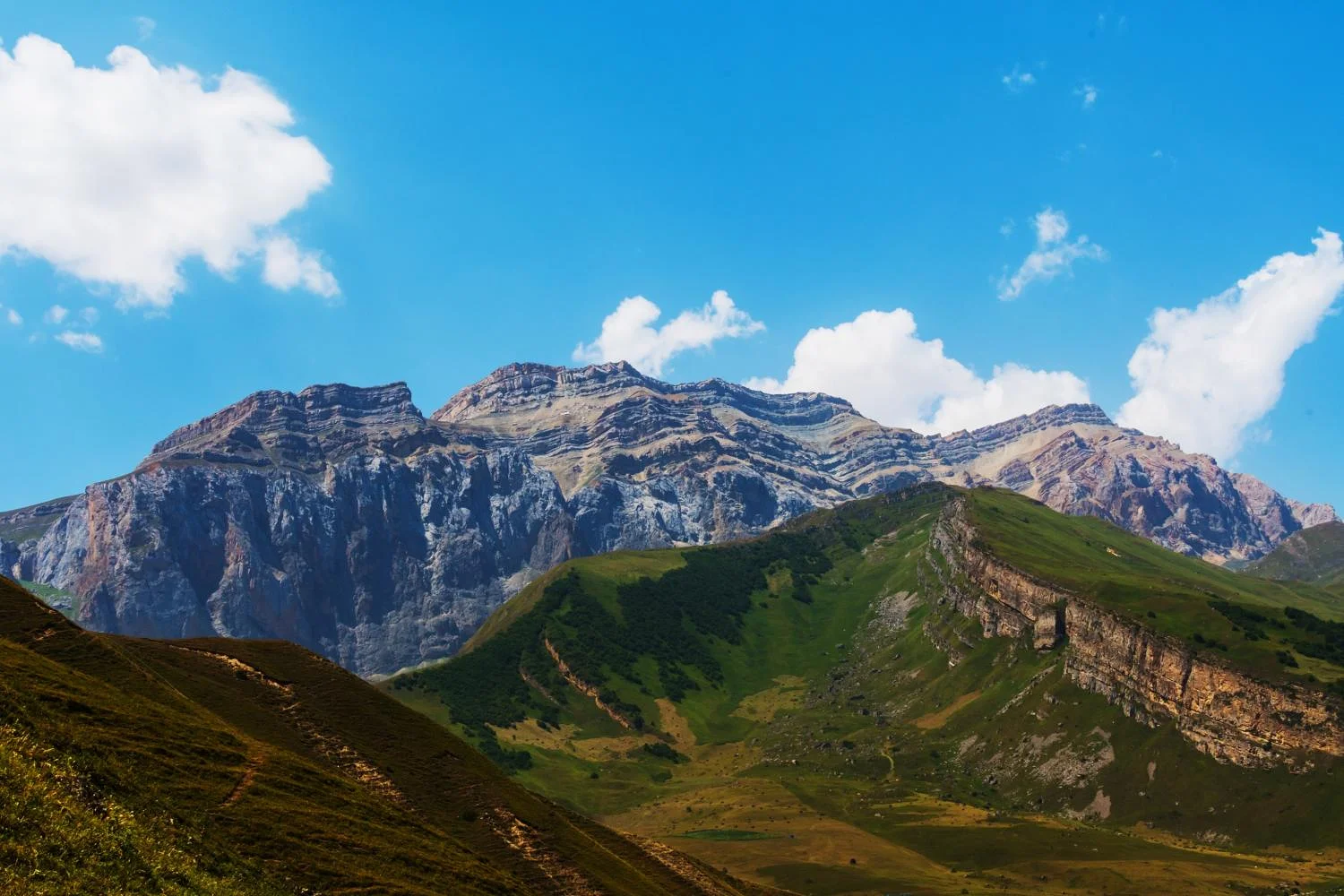
From Quba, a two-hour bus ride north of Baku, a winding mountain road climbs for three more hours to Khinalig, one of the oldest and highest continuously inhabited villages in the Caucasus at 7,200 feet. Its 2,000 residents speak Khinalug, a language with no known relatives. The village's isolation has kept pastoral traditions largely intact.
Stone houses stack up the mountainside facing a panorama of snow-capped ridges. Local guesthouses offer a bed and meals for around 20 AZN (about $12). The hike to the neighboring village of Laza, near a series of waterfalls, ranks among the best walks in the entire Caucasus. Plan this trip between June and September: the road is snowed in the rest of the year.
Quba itself is worth a stop. The town is home to Krasnaya Sloboda, the only entirely Jewish town outside of Israel, populated by Mountain Jews. A local museum tells their history. The region is also known for its carpets and apples.
Ganja, Gabala, and the south: the Azerbaijan most visitors never see
Ganja
Azerbaijan's second city, Ganja, moves at a slower pace and holds historical sites tied to Nizami Ganjavi, one of the great figures of Persian literature. It's a solid base for reaching Goygol Lake, a deep-blue mountain lake ringed by forest about 19 miles out. Foreign tourists rarely make it here.
Gabala
Gabala, further north, draws Azerbaijani families with its waterfalls, the Tufandag cable car, and dense forest. In winter, the Tufandag and Shahdag ski resorts offer Caucasus skiing for a day pass of around 25 to 35 AZN ($15-20). The season runs mid-December through late February and the slopes are rarely crowded.
Southern Azerbaijan
Down at the Iranian border, Lankaran and the subtropical coast sit in a different climate zone entirely. Hirkan National Park protects ancient forests dating to the Tertiary period and rare wildlife including the Caucasian leopard. Almost no foreign tourists come here, which makes it one of the last corners of the country that still feels genuinely undiscovered.
Azerbaijani food: Persian flavors, Turkish accents, Caucasian generosity
The food is one of the best surprises in Azerbaijan. The national dish, plov, is saffron rice cooked with dried fruits, chestnuts, and meat. In its most celebratory form, shah plov, it arrives sealed under a golden pastry crust and is served in traditional restaurants with a ceremony that's worth the experience on its own.
Qutab, thin savory crepes stuffed with ground meat or fresh herbs, are sold everywhere for pocket change. Piti, a slow-cooked lamb and chickpea stew served in a clay pot, is the mountain comfort food. In Sheki, order a Sheki-style piti at one of the bazaar restaurants: the local recipe is slightly different from Baku's version, and the setting makes it better.
Black tea, served in pear-shaped armudu glasses with jam or sugar cubes, marks every meal and every meeting. Azerbaijanis drink it constantly, and turning down a glass is considered mildly rude.
When to go to Azerbaijan
The best windows are April through June and September through October. Spring brings pleasant temperatures and Novruz, the Persian New Year celebrated around March 20, which fills the whole country with dancing, bonfires, and feasting for five days. Fall delivers spectacular mountain foliage and local festivals including the Pomegranate Festival in Goychay in November.
Summer (June through August) is brutal in Baku, where temperatures regularly hit 104°F. It is, however, the only season when the high-mountain routes to Khinalig and Laza are passable. Winter is mild on the coast but harsh at elevation, with winds in Baku sometimes reaching 80 mph.
Getting to Azerbaijan
Land borders are closed to entry, so flying is your only option. There are no direct flights from the US to Baku as of this writing. Your best connections are through Istanbul on Turkish Airlines, through London, or through other European hubs. Azerbaijan Airlines (AZAL) operates direct flights from several European cities to Heydar Aliyev International Airport in Baku. Budget for round-trip airfare from the US in the range of $700 to $1,200 depending on routing and season.
US passport holders need a visa. The e-visa is available through the ASAN Visa portal for $25 USD and processes in 3 business days. Check your dates carefully when it arrives: overstaying leads to fines and administrative complications that can only be resolved at the State Migration Service in Baku, never at the airport.
Getting around Azerbaijan
Intercity minibuses called marshrutkas are the most practical option. They run frequently and cheaply: Baku to Quba takes 2 hours for 5 AZN ($3), and Baku to Sheki takes about 6 hours for around 8 AZN ($5). Buses depart from the Baku International Bus Terminal, reachable by metro at the Avtovagzal station. For popular routes like Sheki or Ganja, book a comfortable express bus in advance rather than relying on marshrutkas.
An overnight train connects Baku to Sheki and saves time on longer legs. The rail network is limited but punctual. For mountain villages like Khinalig or Lahij, a private taxi from the nearest town is non-negotiable: expect to pay 50 to 60 AZN ($30-35) from Quba to Khinalig. The Bolt app works well in Baku and larger cities for regular taxi rides.
Car rental is an option but only for confident drivers. Main highways are fine, but secondary and mountain roads are often narrow, poorly lit, and shared with livestock. Driving at night outside Baku is genuinely not recommended.