
Visiting Rizal Park
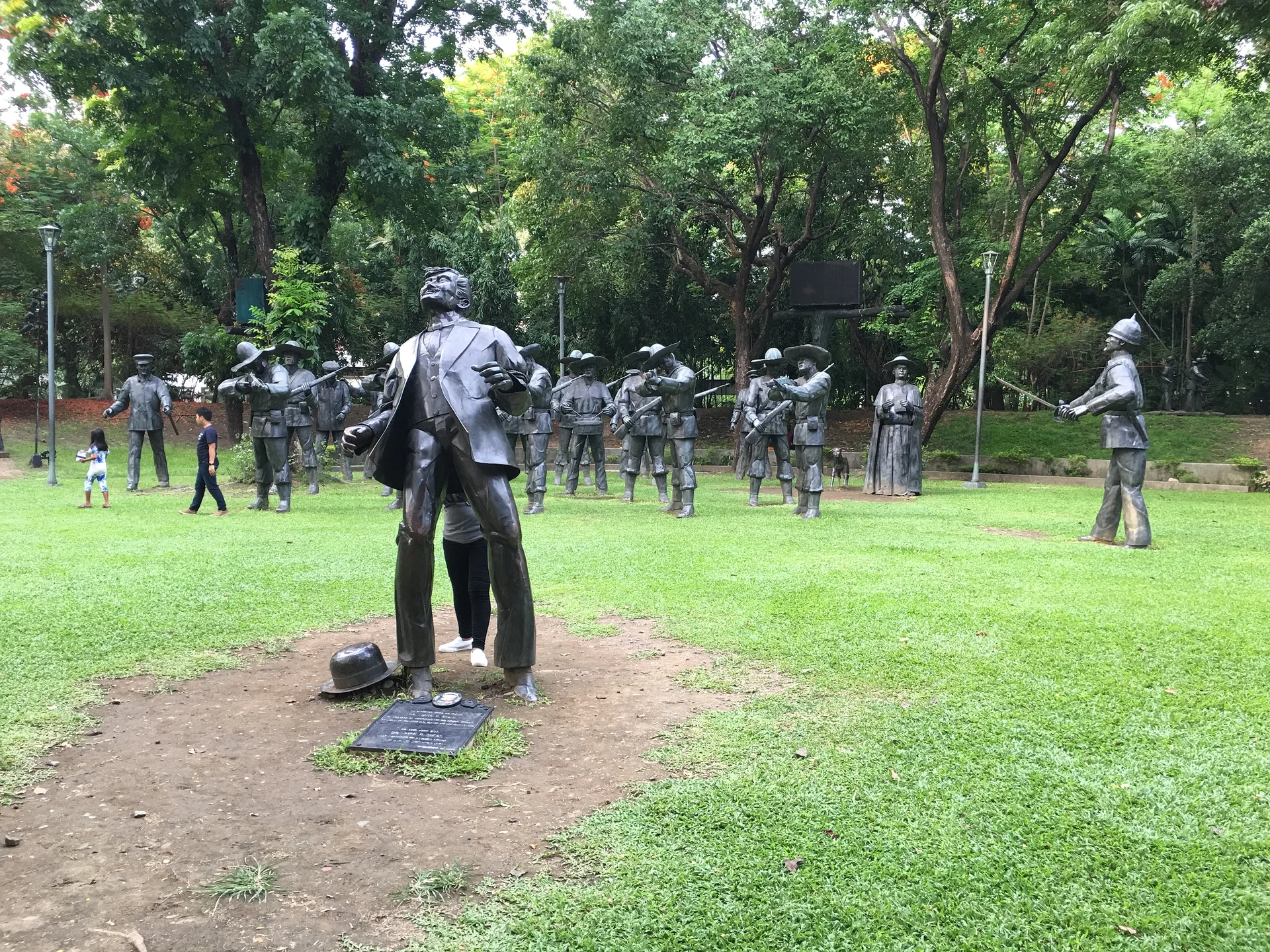
Rizal Park is a sprawling 58-hectare public space located along the bay of Manila in the Philippines. Beyond its curated Chinese, Japanese, and Italian gardens and an artificial lagoon, the park holds deep symbolic weight for the Filipino people. For more than 70 years, Spanish colonial forces used this site as an execution ground for Filipino rebels, most notably the writer José Rizal. At the park entrance, Rizal’s final poem, written just before his execution, is etched into a black granite wall.
A Symbol of Philippine Independence
Rizal Park is a cornerstone of the national identity, as it was here that the country's declaration of independence was proclaimed in 1946, marking the end of colonial rule. Today, the park serves as a collection of national symbols, including the Philippine flag flying from a 31-meter pole that marks the official kilometer zero of the archipelago, as well as a relief map of the 7,107 islands of the Philippines.
The famous Rizal Monument, designed by Richard Kissling in 1912, hosts a sound and light show on summer evenings. The park grounds also house several key political and cultural institutions, including the National Museum of the Philippines, where the skull of the Tabon Man, dating back to 20,000 BCE, is on display.
One of the Largest Public Parks in Asia
While the site was long occupied by Spanish colonizers and later the American military, it opened to the public in the early 20th century. As a green oasis, it features a vast Orchidarium showcasing a wide array of tropical flowers and plants. The park is a favorite local destination for Filipinos who come here to relax, exercise, and even play chess.

A must-see spot if you are going to be touring around Manila.
It is a place full of history and very relaxing.