
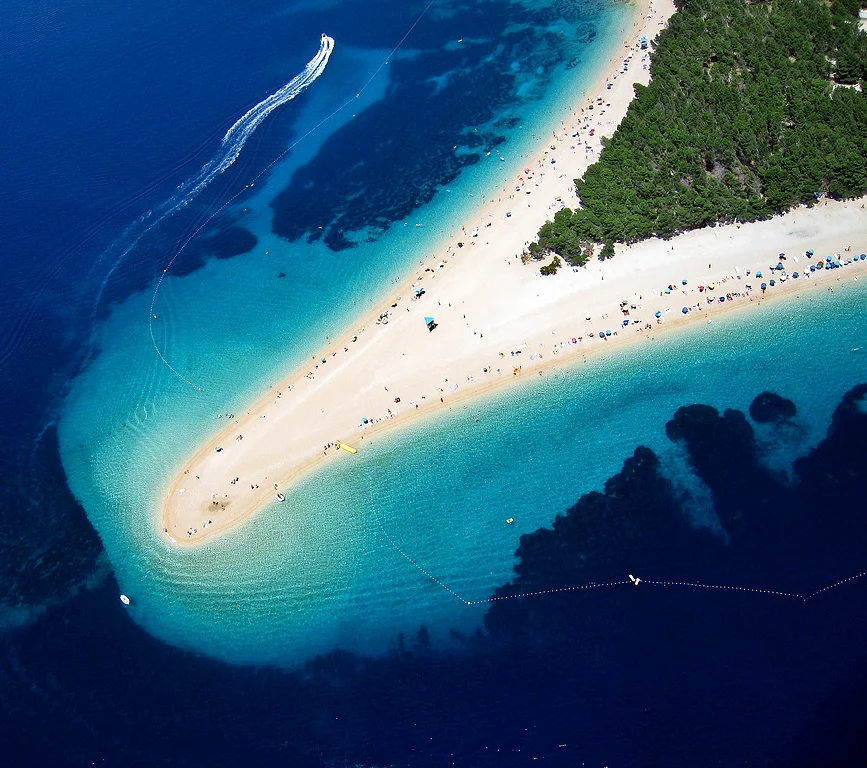
Zlatni Rat Beach, the beach that refuses to sit still
Viewed from above, it looks like a white comma etched into the Adriatic. On the ground, the pebbles roll under your feet, smooth and warm, light gray despite the nickname Golden Horn.
What makes this spit of land so unique is that it moves. Ocean currents and the wind shift its tip by several meters from one day to the next, sometimes toward the east, sometimes toward the west, occasionally forming a small, fleeting lagoon at its very end.
Why visit Zlatni Rat Beach?
Protected by the Croatian government as a geomorphological monument, this pebble peninsula stretches for nearly 500 meters into the Hvar channel, south of the island of Brač. Its V shape and translucent waters regularly place it on lists of the world's most beautiful beaches, from National Geographic to the New York Times.
Topographic data shows that the beach grows longer every year. Between 2006 and 2017, its total length increased by about 80 meters, fueled by sediments washed down from the Vidova Gora mountain looming above.
Up until the 1950s, the land bordering the beach was covered in vineyards. The municipality of Bol later planted the maritime pines that now form a dense pine forest, offering welcome natural shade and a striking contrast against the blue of the sea.
What happens on each side
The east side: calm and family-friendly
The side facing Bol is generally shielded from the maestral, the west wind that picks up every summer afternoon. The water stays flat and shallow for the first few meters, making it ideal for children. It is also the most popular side, with lounge chairs for rent and beach bars like Auro, situated at the edge of the pine forest.
The west side: wind and water sports
The other face of the Horn takes the sea breeze head-on starting around 1 p.m. or 2 p.m. Windsurfers and kitesurfers gather here, carried by a steady wind that has made Bol one of the most reputable spots in the Adriatic. Several schools offer lessons and equipment rentals right on the beach. The extreme tip of the peninsula, battered by waves from both sides, offers the best conditions for snorkeling, with remarkable water clarity and a depth that drops off quickly.
Local tip: arrive before 9 a.m. in July and August. The nearest parking lot costs about 10 EUR ($11) per day and fills up early. Better yet, leave your car in Bol and walk to the beach in 20 minutes via the shaded Put Zlatnog Rata promenade, lined with artisan stands and small bars. In September, the beach returns to a spectacular calm and the sea stays warm.
The surrounding area worth a detour
The beach features showers, restrooms, changing rooms, and a lifeguard service during the season. For food, several kiosks in the pine forest serve pizza, crepes, and cold drinks at reasonable prices, even if the arrival of the Euro has pushed costs up. A tourist road train connects Bol to the beach for a few euros, which is convenient with young children or at the end of the day when your legs are tired.
200 meters west of Zlatni Rat, a discreet naturist beach runs along the coast under the pines. The setting is wilder, the view of the Golden Horn is stunning, and there are significantly fewer people. For hikers, the ascent of Vidova Gora, the highest point of all the Croatian islands at 778 meters, offers a bird's eye view of the beach and the Hvar channel. Plan for a 2.5 hour climb from Bol.
The port of Bol, 2 kilometers away, is worth a stop for its Dominican monastery and small seafood restaurants along the quay. Water taxis shuttle back and forth all day between the port and the beach for those who prefer an arrival by sea.
Opening hours
*Information subject to change

This beach is a must-see in Croatia, and it is even considered one of the most beautiful beaches in the world. It is true that it is magnificent. However, its fame makes it a super touristy spot. During high season, you have to arrive early to find a place to set up.