
Hiroshima, the memorial that transforms horror into a plea for peace
The silence hits you first. In a country where museums often buzz with conversation, this one demands an instinctive restraint. Visitors walk slowly, reading every panel and pausing before a watch frozen at 8:15. It is the exact time when, on August 6, 1945, the world changed forever.
Why visit the Hiroshima Peace Memorial?
The park and museum occupy a 12 hectare island between the Honkawa and Motoyasu rivers. Before the bomb, this district was the political and commercial heart of the city. Architect Kenzō Tange designed this space of reflection, which opened in 1954. More than 50 million people have visited the museum since it first opened its doors. The site seeks neither to accuse nor to simply victimize. It documents exactly what a nuclear weapon does to human beings.
The museum: two buildings, a lesson in humanity
The East Building
The tour begins on the 3rd floor of the East Building. Projections recreate Hiroshima before and after the explosion. Models illustrate the radius of destruction and the temperatures reached on the ground. Renovated in 2019, this building uses projection mapping to make the timeline of the bombing remarkably clear.
The Main Building
The tone shifts significantly here. In this section, the objects speak. There is a scorched tricycle that belonged to a three year old boy. School uniforms melted by the heat. Deformed bento boxes. Each display case bears a name, an age, and a story. Filmed testimonies of the hibakusha, or survivors, play on a loop. Some of these images are difficult to witness.
An audio guide in 14 languages, including English, is available for rent on the ground floor of the East Building for 400 JPY (about $2.70).
Monuments throughout the park
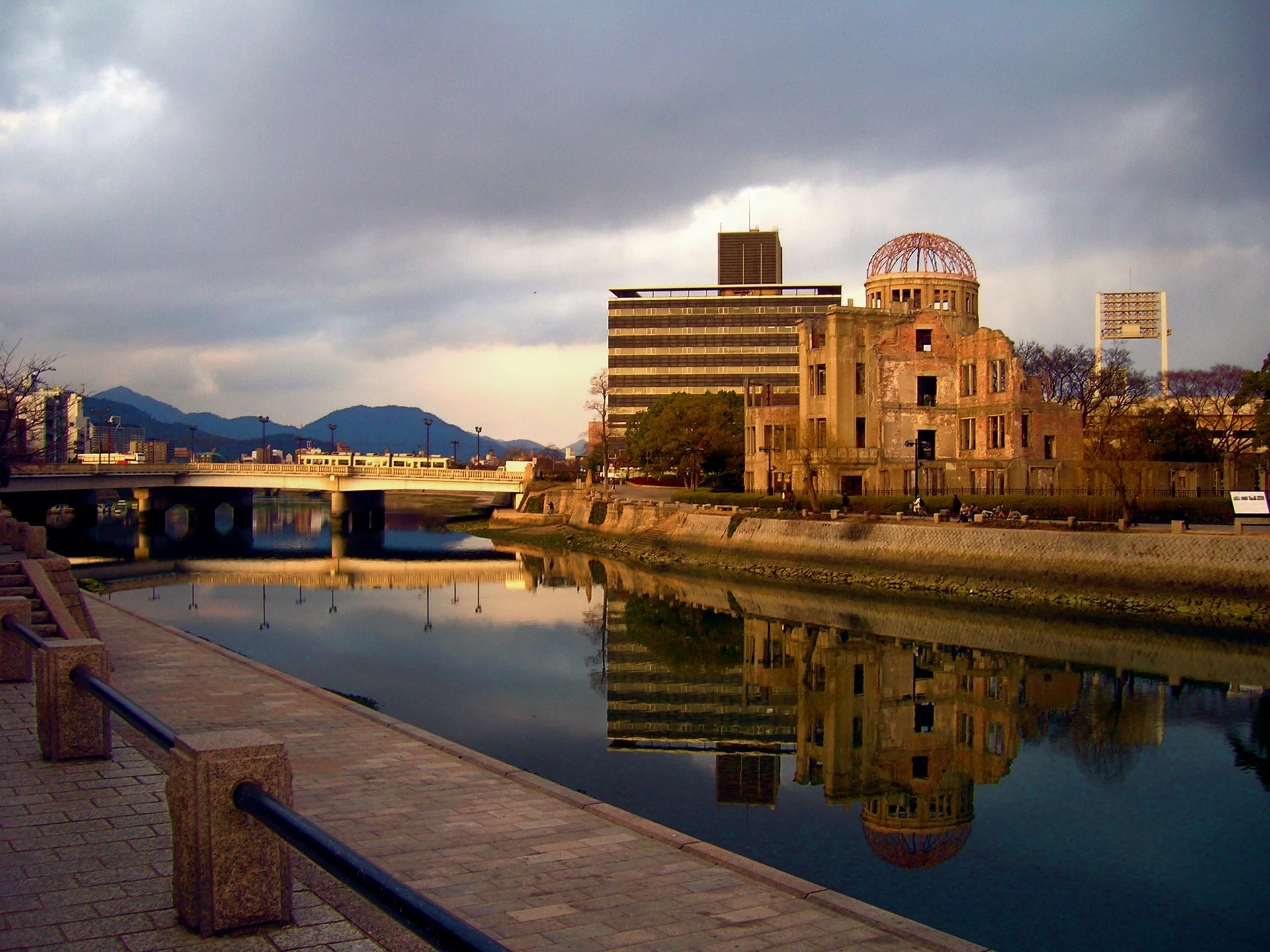
The Genbaku Dome (Atomic Bomb Dome), a UNESCO World Heritage site, stands on the other side of the river. It is the skeletal remains of the former Industrial Promotion Hall, one of the few buildings left standing near the hypocenter. Its gutted silhouette has become a global symbol.
In the center of the park, the Cenotaph designed by Kenzō Tange houses a chest containing the names of all the victims, now totaling more than 330,000. Its granite arch frames the Flame of Peace and the Dome in the background. This flame, lit on August 1, 1964, will burn as long as nuclear weapons exist.
The Children's Peace Monument is the most moving. It pays tribute to Sadako Sasaki, a girl who was two years old at the time of the explosion and developed leukemia a decade later. According to Japanese legend, folding one thousand origami cranes grants a wish. Sadako folded her cranes until she died in 1955. Her classmates raised funds for the monument. Millions of paper cranes arrive from all over the world to adorn the display cases surrounding the statue.
Pro tip: The quietest times to visit are before 10 a.m. on weekdays. Purchase your tickets online via the official website. The 7:30 a.m. to 8:30 a.m. slots are only available via web reservation, and this is when the visit is most contemplative.
Opening hours
*Information subject to change

I have never seen a memorial or museum honoring the victims of a catastrophic event that was this disturbing. The images, audio, and objects are extremely upsetting, and yet I am not a person who is sensitive to those kinds of things. You see, among other things, a piece of burnt skin, yuck!
If the museum had included a solid geopolitical section, that would have suited me, but you learn almost nothing about the history that led to the bomb. There are only a few explanatory panels in English at the end, which is a shame. I usually love this type of museum, though.